
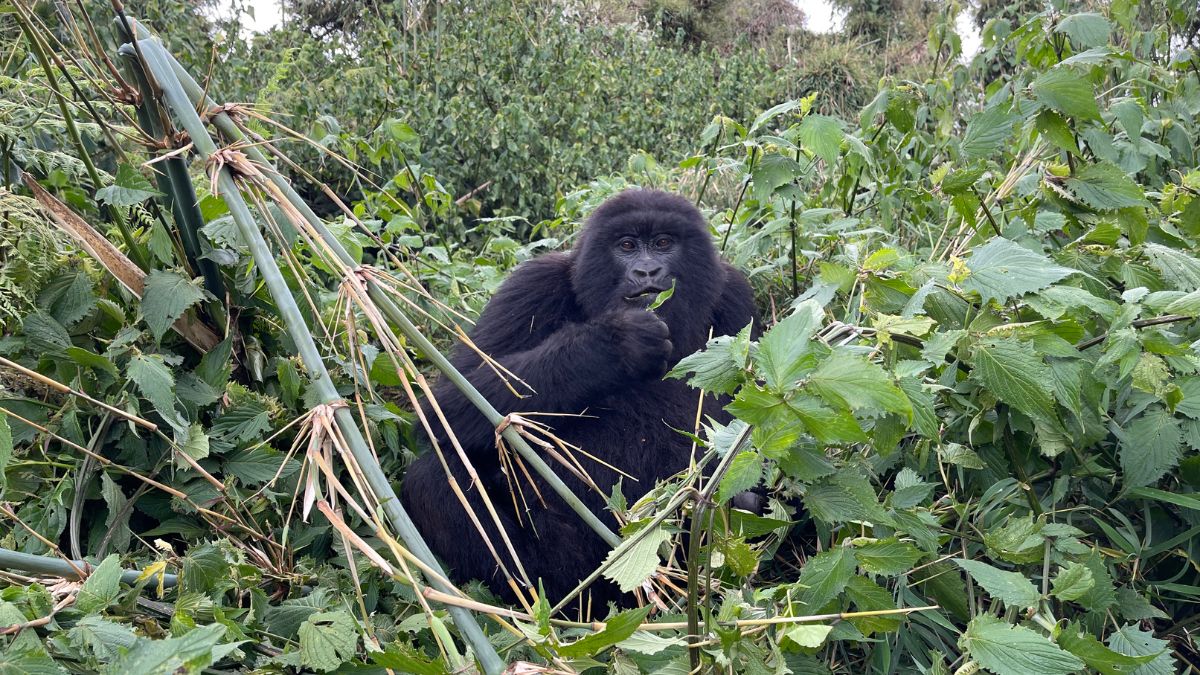
In the highlands of Virunga massif, only about a thousand mountain gorillas remain, and one of the safest, most accessible places to meet them is Rwanda’s Volcanoes National Park. About 2 hours from Kigali to Musanze, where the park is, many travellers step out of their safari vehicles and take a hike into the forest to go mountain gorilla trekking, which is a once-in-a-lifetime experience.
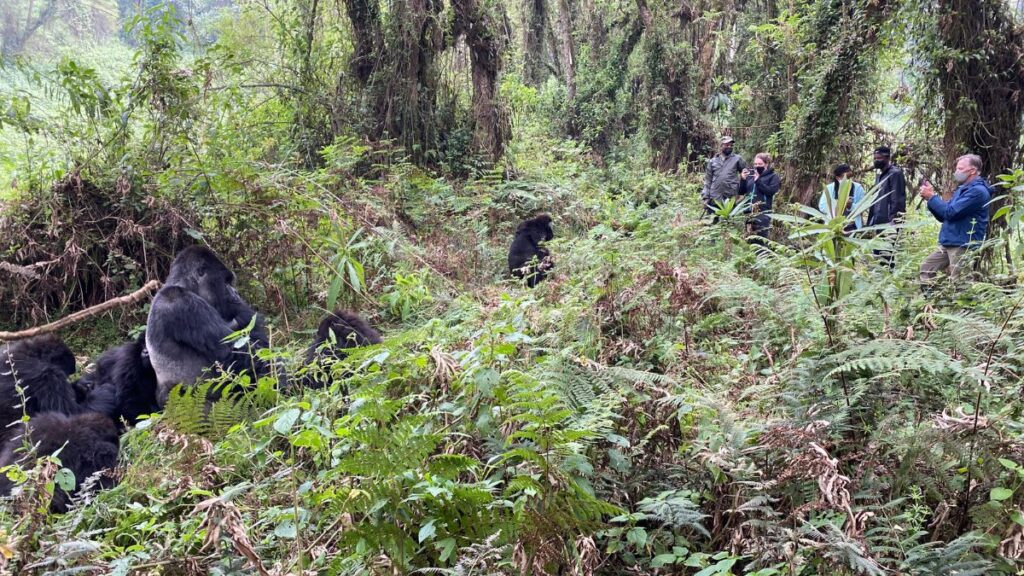
That hour essentially reveals something extraordinary: the exact daily lives of a mountain gorilla family, from baby gorillas to their mothers and the silverback, the king of the home. It does not end with only that amazing moment, but also your permit goes straight to empower their conservation by keeping poachers out and rangers in work. The community around benefits too. Through sustainable tourism, you help fund schools, roads, and clinics for nearby communities, too.
This guide is going to walk you through everything you need to know before you book your gorilla trekking experience: the best time to visit, what to pack, costs and permits that make your trek memorable and comfortable.
READ MORE: We go behind the scenes of a safari in Botswana, Africa
Mountain gorilla trekking in Volcanoes National Park?
Unlike Uganda or the Democratic Republic of the Congo (DRC), where mountain gorillas are found too, all trekking experiences in Rwanda take place around 5 volcanoes, includingKarisimbi, Bisoke, Muhabura, Gahinga and Sabyinyo that make up Volcanoes National Park. This is the Rwandan side of the Virunga range.
Your day usually starts early. Before sunrise, your tour operator sends a driver guide to pick you from your lodge in Kinigi or Musanze town to the park headquarters and join other trekkers for a briefing and permit verification.
Rangers explain gorilla trekking rules and assign groups based on fitness level and trekking preference. Some gorilla families are closer to the trailhead; others might require several hours of hiking.
The hike itself can last anywhere from 30 minutes to over three hours each way, depending on where your allocated family has moved overnight.
Each family has its own personality: some are led by huge, calm silverbacks; others have playful youngsters who tumble over each other in the vines. Every group of trekkers is assigned to one family, accompanied by expert guides and trackers who know the forest.
Best time to visit mountain Gorillas in Rwanda
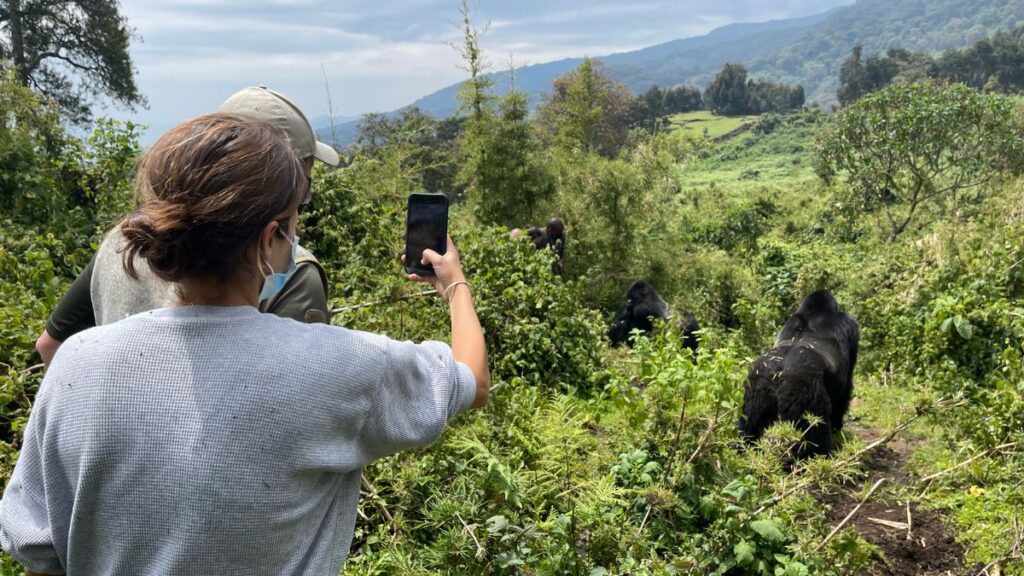
Rwanda is a year-round destination, but seasons matter. The long dry season from June to September is widely considered the best time for mountain gorilla trekking in Rwanda. Rain showers are shorter, and visibility on the volcano slopes is better.
A second short dry season starts from December to February, offering similar advantages with slightly fewer visitors. According to Swift Africa Safaris, the best time to visit mountain Gorillas in Rwanda is during these dry months when the ground is less slippery, trekking times tend to be shorter, and photography conditions are clearer. This echoes what park authorities and independent safari specialists recommend.
The rainy seasons, March to May and again in November, paint the forest in deep green. The rainfall is heavier with mud and occasional low cloud that can turn the trek into a tougher endurance hike. Some travellers still choose these months for lower lodge rates and quieter trails, but it is important to be comfortable with wet, slippery conditions.
Gorilla trekking permits in Rwanda: cost and booking
A gorilla trekking permit is your official key to the forest. Currently, a standard permit costs USD 1,500 per person per trek for international visitors. Numbers are strictly limited. Around 96 permits per day are available for Volcanoes National Park, spread across roughly a dozen habituated gorilla families.
In high season (June to September and December to February), these can sell out months in advance. You can technically buy a permit directly from RDB, but most visitors book through a specialist tour operator who bundles permits together with transport, guiding, and accommodation with other activities beyond gorillas if you have a couple of days in the country.
To book your gorilla trekking permit in advance is crucial because permits demand peaks in the dry season as well as lodges. You might prioritise booking in advance of both.
Once your permit is confirmed, the rest of the itinerary transfers and extra activities can be built confidently later. Last-minute permits are sometimes available in the rainy months, but relying on this is risky if you only have a few days in Rwanda.
Is mountain gorilla trekking in Rwanda difficult?
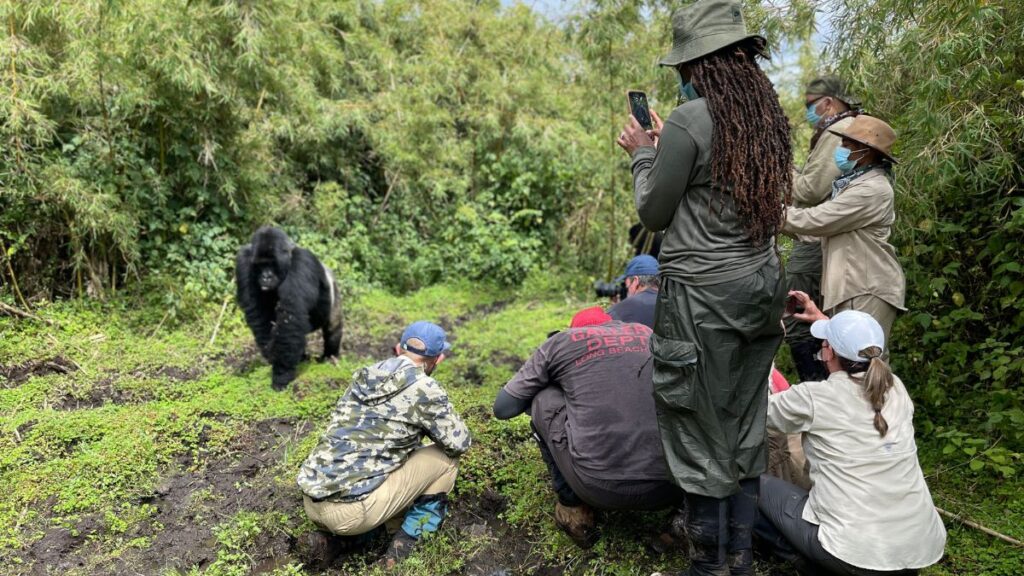
Gorilla trekking in Rwanda is physically demanding but manageable for most reasonably active adults. The altitude is often between 2,400 and 3,100 meters, which means thinner air than at sea level.
The good news is that Rwanda is generally considered one of the easier gorilla trekking destinations. Families like Sabyinyo or Hirwa are often found relatively close to the trailhead, and park staff group trekkers by approximate fitness level so that those who prefer a shorter hike are not sent on the most strenuous route.
Porters are available for a modest fee. They carry your daypack, offer a steadying hand on steeper sections, and their income provides another financial link between conservation and local livelihoods.
What to pack for mountain gorilla trekking in Rwanda
Packing well makes a huge difference once you are several hours from the trailhead in unpredictable mountain weather. Here is a focused packing list for gorilla trekking in Rwanda:
- Sturdy, waterproof hiking boots with good ankle support
- Moisture-wicking socks (ideally two pairs so you can change if wet)
- Long, lightweight hiking trousers to protect from stinging nettles
- Long-sleeved breathable shirt plus a thin fleece
- Waterproof jacket or poncho: showers can appear without warning
- Gardening or trekking gloves to protect your hands when grabbing vegetation
- Daypack with rain cover, including at least 2 litres of water and some high-energy snacks
- Insect repellent and sunscreen, even on cloudy days
- A compact camera or phone with good zoom, and a soft cloth to wipe lenses in the mist
Many lodges near Volcanoes National Park offer boot cleaning, gaiter rental, or even walking sticks, so you do not need to bring everything from home.
Gorilla trekking rules and responsible travel
To protect both gorillas and visitors, Rwanda enforces strict gorilla trekking rules. Understanding them in advance helps you feel more relaxed on the day.
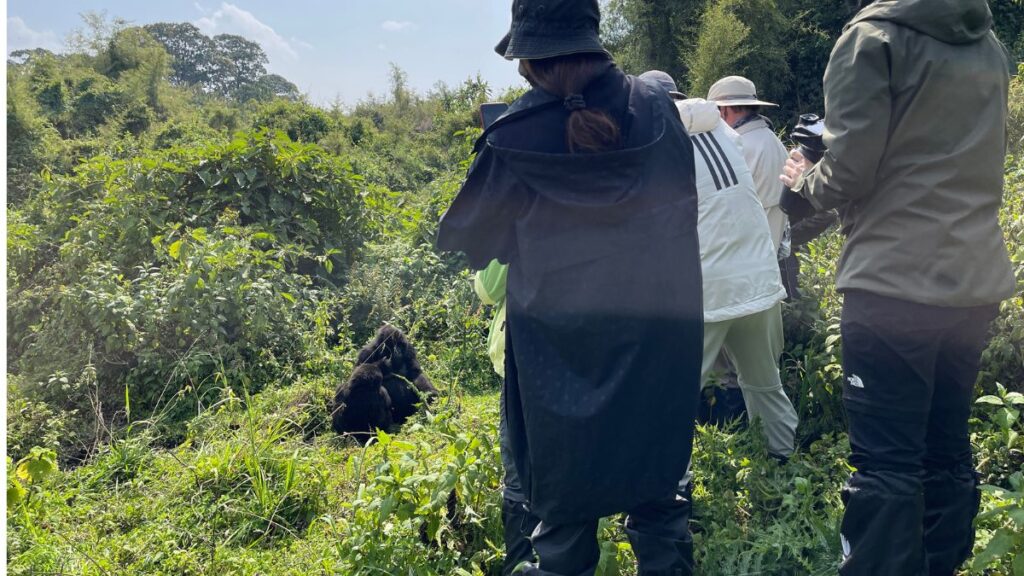
You must keep a minimum distance of 7 to 10 meters from the gorillas. Even if a curious youngster moves closer, guides will gently ask you to step back. This distance reduces the risk of disease transmission and stops gorillas from becoming too accustomed to human closeness.
Other key rules include:
- Do not trek if you feel unwell, as colds and flu can seriously harm gorillas.
- Wear a mask if requested by guides; protocols can change based on current health advisories.
- Cough or sneeze into your elbow, turning away from the animals.
- Do not eat, drink, or smoke near the gorillas.
- No flash photography, no loud voices, and no touching vegetation unnecessarily.
Following these guidelines is part of responsible travel. It ensures that future trekkers and future generations of gorillas can enjoy the same encounter you do today.
READ MORE: We explore Gjirokastër in Albania for the first time
Where to stay near Volcanoes National Park
Accommodation around Volcanoes National Park ranges from characterful guesthouses in Musanze to luxurious lodges perched on hillsides with views of the volcano chain.
Staying close to the park headquarters has two advantages. First, your transfer on trekking day is short, so you can sleep a little longer and still arrive for the morning briefing. Second, many lodges have staff who are used to early breakfasts, packed lunches, and post trek boot cleaning, making the whole experience smoother.
Some operators typically partner with a curated mix of comfortable midrange lodges and intimate luxury camps, which means you can match your base to your budget while still being well positioned for gorilla trekking and nearby cultural encounters around Musanze and the Twin Lakes.
Gorilla trekking in Rwanda is more than a wildlife observing but also a quiet hour in the presence of a species that has fought back from the brink, in a country that has used tourism to fuel renewal and pride. Book your permit, pack well and get ready to meet a silverback somewhere ahead on the trail.
This article was contributed by Daniel Ntakirutimana from Swift Africa Safaris Ltd. The original article has been edited according to the standards of Travel Wanderlust.
